What are Vultures?
Vultures are a group of birds that belong to the order Accipitriformes. This group contains the vast majority of birds commonly referred to as “Birds of Prey” (with the notable exceptions of Falcons and Owls). The birds we commonly refer to as “vultures” can be divided into two major groups, the New World vultures and the Old World vultures, named after the continents they primarily reside on. Despite the superficial similarities, the two groups do not share a recent common ancestor, with the shared adaptations towards scavenging being the result of convergent evolution (ie: independent evolution that produces similar results), such as very strong stomach acid to easily break down corpses and destroy any infectious bacteria present.
Old World vultures belong to the family Accipitridae alongside Hawks and Eagles. New World vultures belong to the family Cathartidae and, whilst formerly considered to be close relatives of storks, they have recently been confirmed as members of the order Accipitriformes as well.
In order to travel to and locate potential food, vultures utilize both soaring flight (flying without the need to flap their wings) as well as their excellent sense of vision, with them able to spot a carcass from up to 4 miles away. Vultures can travel over vast distance in order to locate even a single carcass to eat. This is because, when compared to plant-eating and predatory animals, the food source of vultures is much less reliable, with vultures in general being poorly suited to bringing down their own prey. As a result, they are reliant on outside factors to provide them with enough food, rendering it rather tricky for them to acquire enough food to survive.
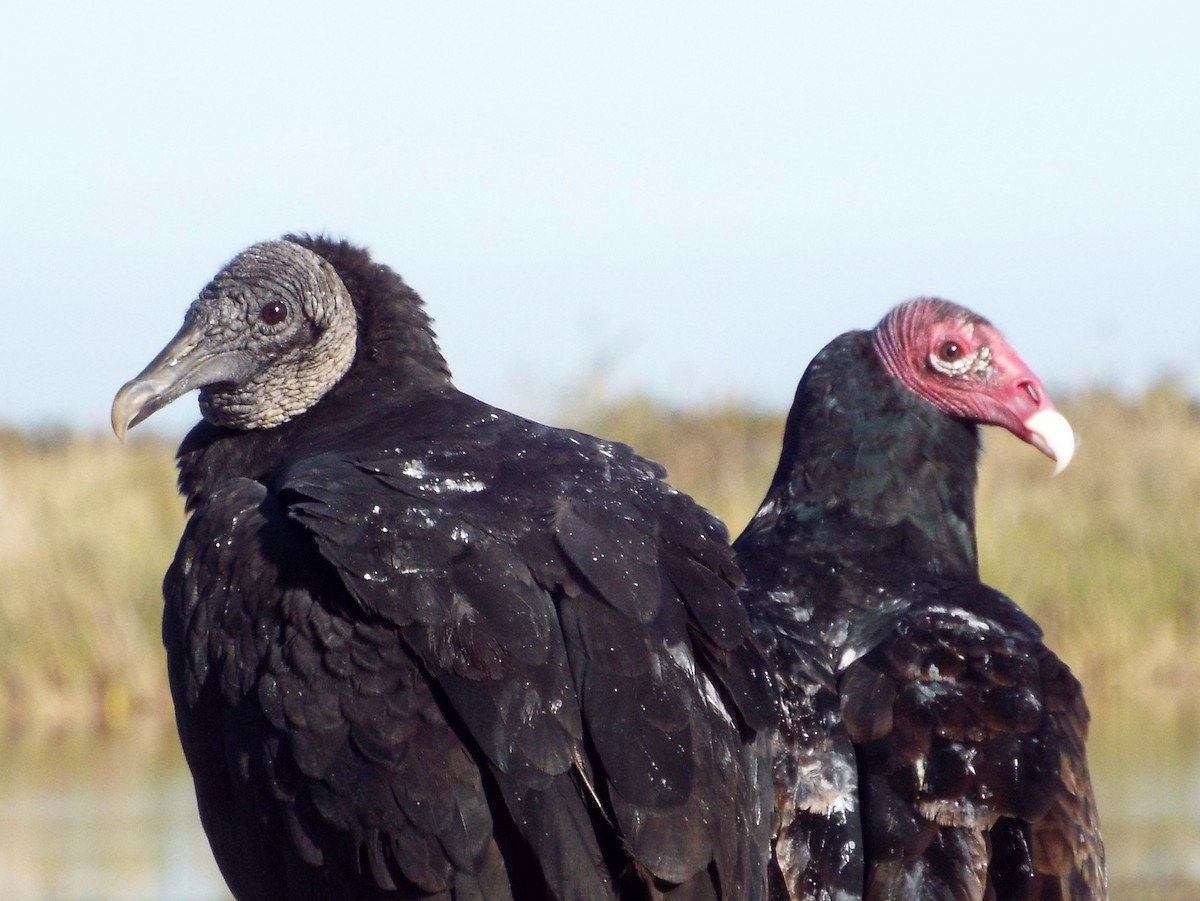
As the name would suggest, the 7 species of New World vultures are found exclusively in the Americas. They can be physically distinguished from their Old World counterparts by the lack of separation between their nostrils (with them appearing to have a hole in their head), their relatively longer heads and their habit of defecating onto their legs in order to cool themselves down, much like storks. They also lack a syrinx, the bird equivalent of a voice box, limiting the range of the sounds they can produce. Additionally, Vultures of the genus Cathartes are amongst the only birds to possess a sense of smell, which they use to locate carcasses.
One notable extinct species of New World vulture was the single heaviest bird to ever fly, Argentavis magnificens, which was estimated to possess a mass of around 70-72 kg (154-159 lbs) with a wingspan of about 5.6 metres.
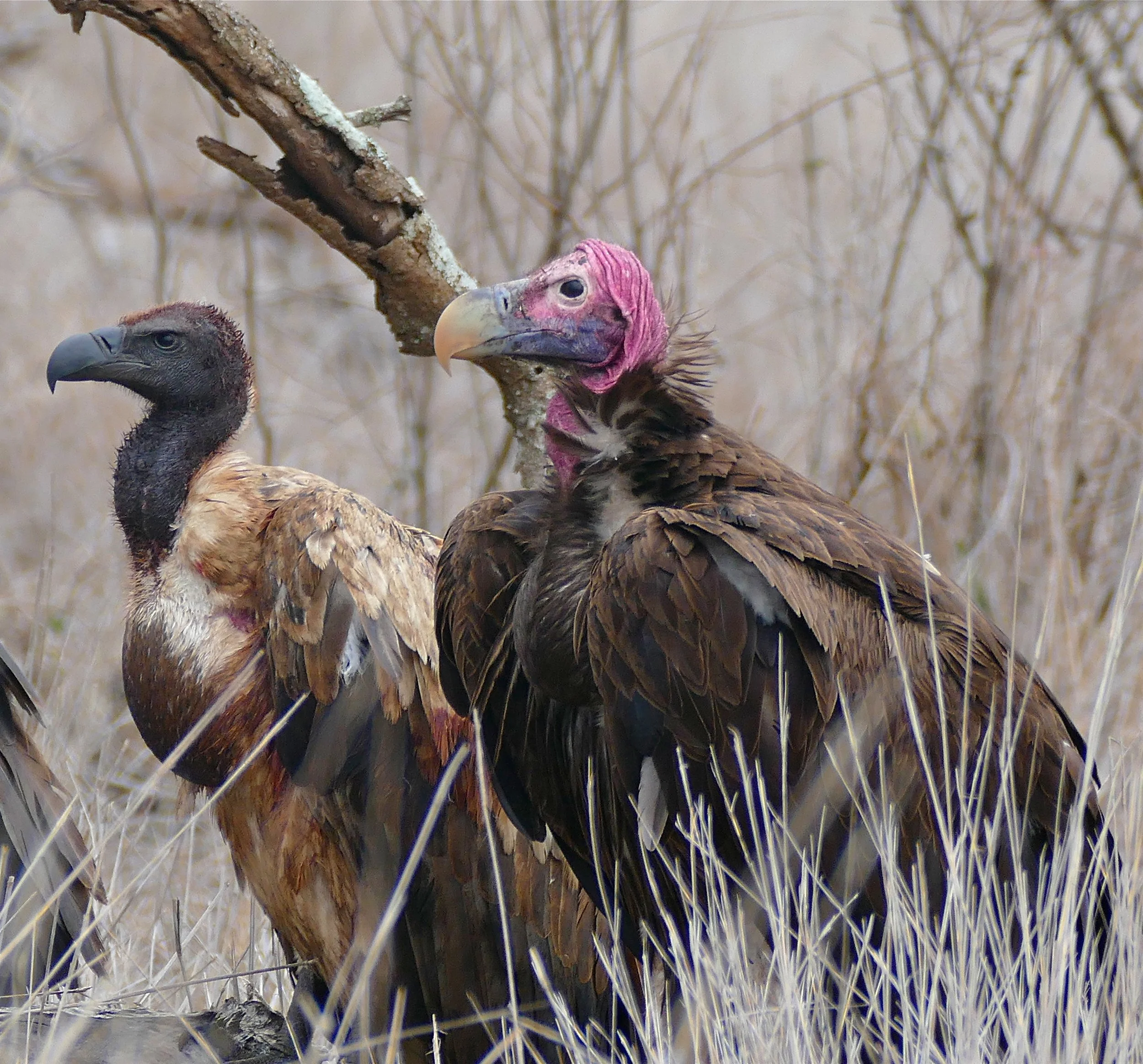
The 16 species of Old World vultures can be found throughout both Eurasia and Africa. They can be physically distinguished through their more powerful, grasping feet as well as their more prominent brow ridges. Much like vultures in general, Old World vultures similarly do not share a common ancestor amongst themselves. The palm-nut, bearded and Egyptian vultures (the former 2 lacking the bald heads typical of vultures) belong to the subfamily Gypaetinae and are closely related to honey buzzards and cuckoo-hawks, while the remaining 13 species belong to the family Aegypiinae, instead being closely related to snake eagles.