Old World Vultures
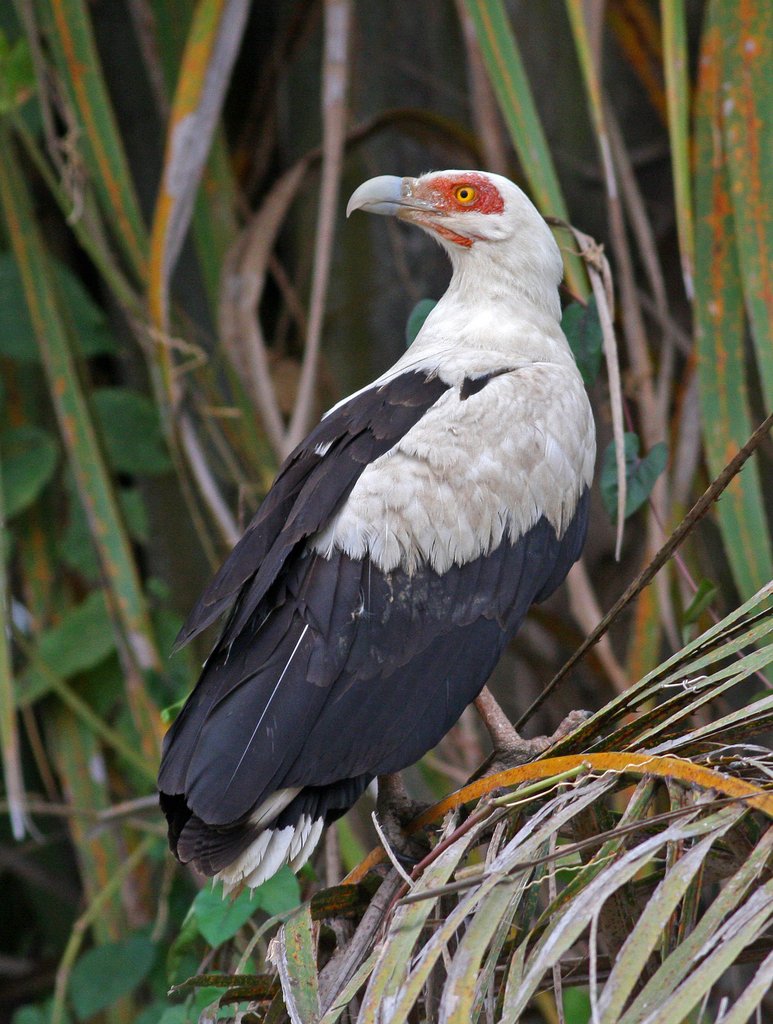
Gypohierax angolensis
Distribution: Sub-Saharan Africa
Physical Appearance: Primarily white plumage, with black feathers along its back and the tips of the topside of its wings. Face has a red mask around the eyes.
Wingspan: 1.5 m
Mass: 1.2 – 1.5 kg
CS: Least Concern
Fun Fact: Despite being called a vulture, the palm-nut is primarily herbivorous, feeding mostly on fruits.
Palm-Nut Vulture
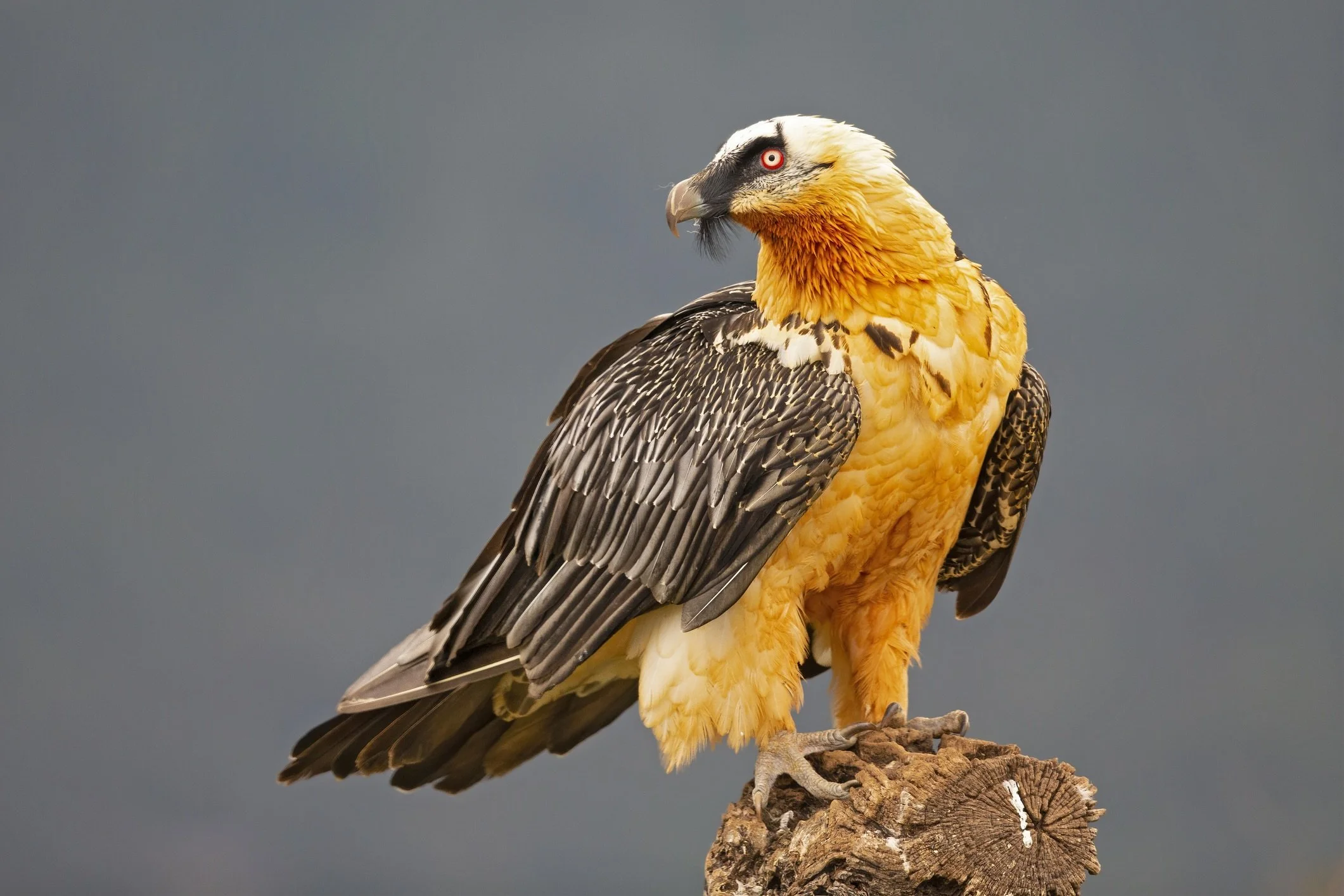
Gypaetus barbatus
Distribution: Eastern South Africa, Ethiopia, Northern Spain, Turkey through to Central China and Northern Mongolia
Physical Appearance: White feathers present on its head, neck, chest and legs. However, these feathers are often stained a rusty orange due to its bathing. Black and white-mottled plumage on its back and wings, with its wing’s undersides being white. Black vertical band are present over its eyes and its beak is a dull tan.
Wingspan: 2.3 – 2.8 m
Mass: 4.5 – 7.8 kg
CS: Near Threatened
Fun Fact: The only vertebrate whose diet consists primarily of bones.
Bearded Vulture
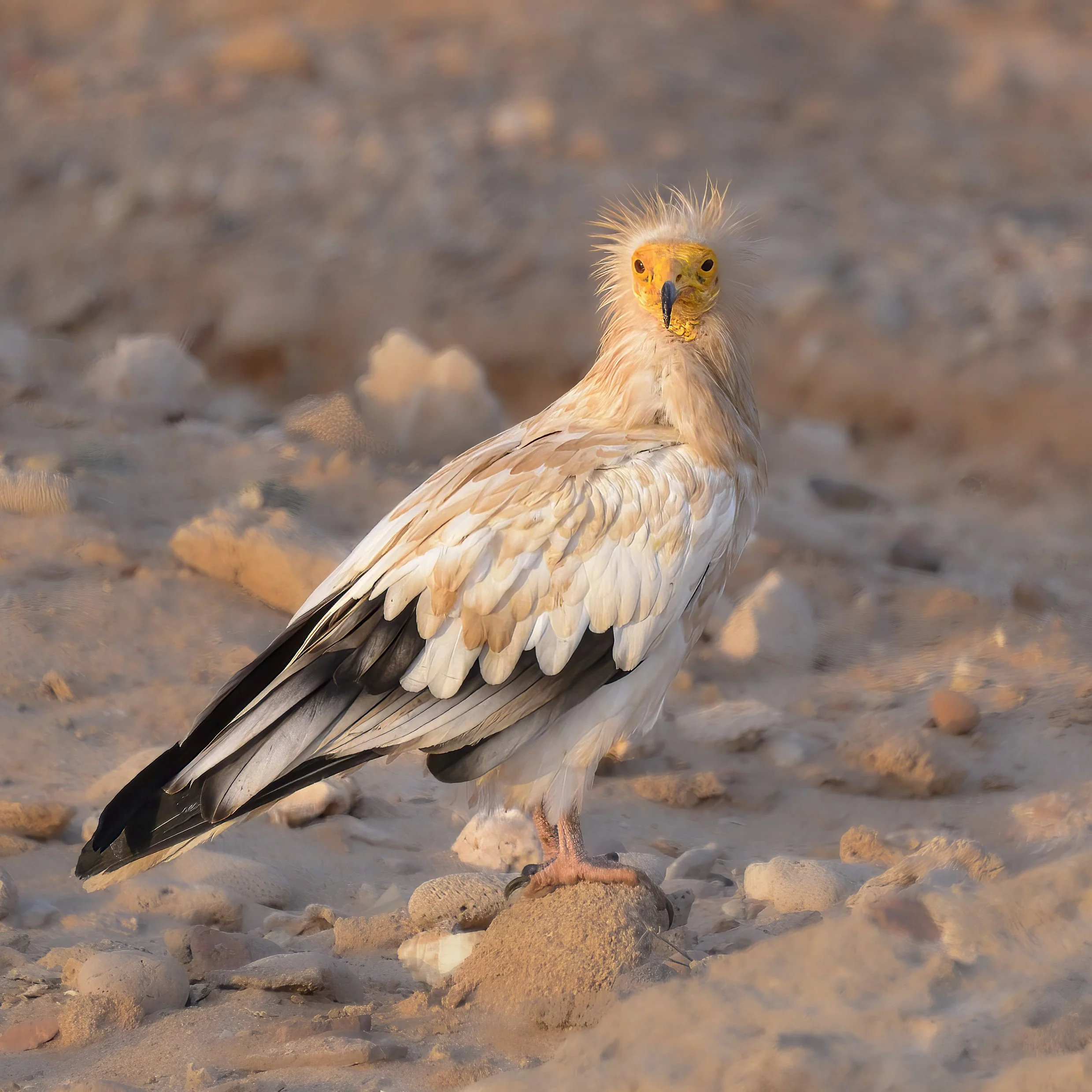
Neophron percnopterus
Distribution: Northern and Central Africa (avoids the Sahara), Middle East through to India, Iberia
Physical Appearance: Face and beaks are yellow. Covered in white plumage, which is especially long around the neck. Flight feathers on its wing’s underside are coloured black.
Wingspan: 1.55 – 1.7 m
Mass: 1.9 – 2.4 kg
CS: Endangered
Fun Fact: One of the few bird known to use tools, utilising rocks to crack open ostrich eggs to feed upon.
Egyptian Vulture
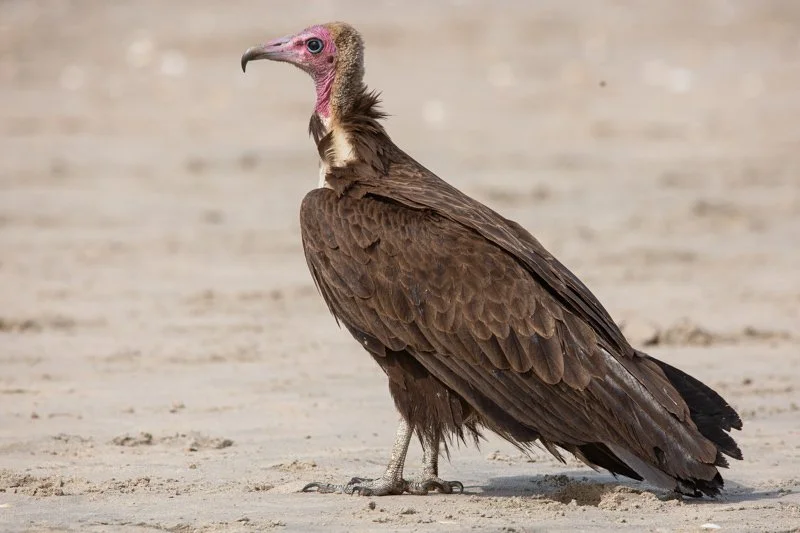
Necrosyrtes monachus
Distribution: Sub-Saharan Africa
Physical Appearance: Head is covered in naked pink skin with a light coating of white feathers down the back of the neck. The plumage is blackish-brown with a ruff of brown feathers around the neck. The beak is red with a blue base.
Wingspan: 1.55 – 1.65 m
Mass: 1.5 – 2.6 kg
CS: Critically Endangered
Hooded Vulture
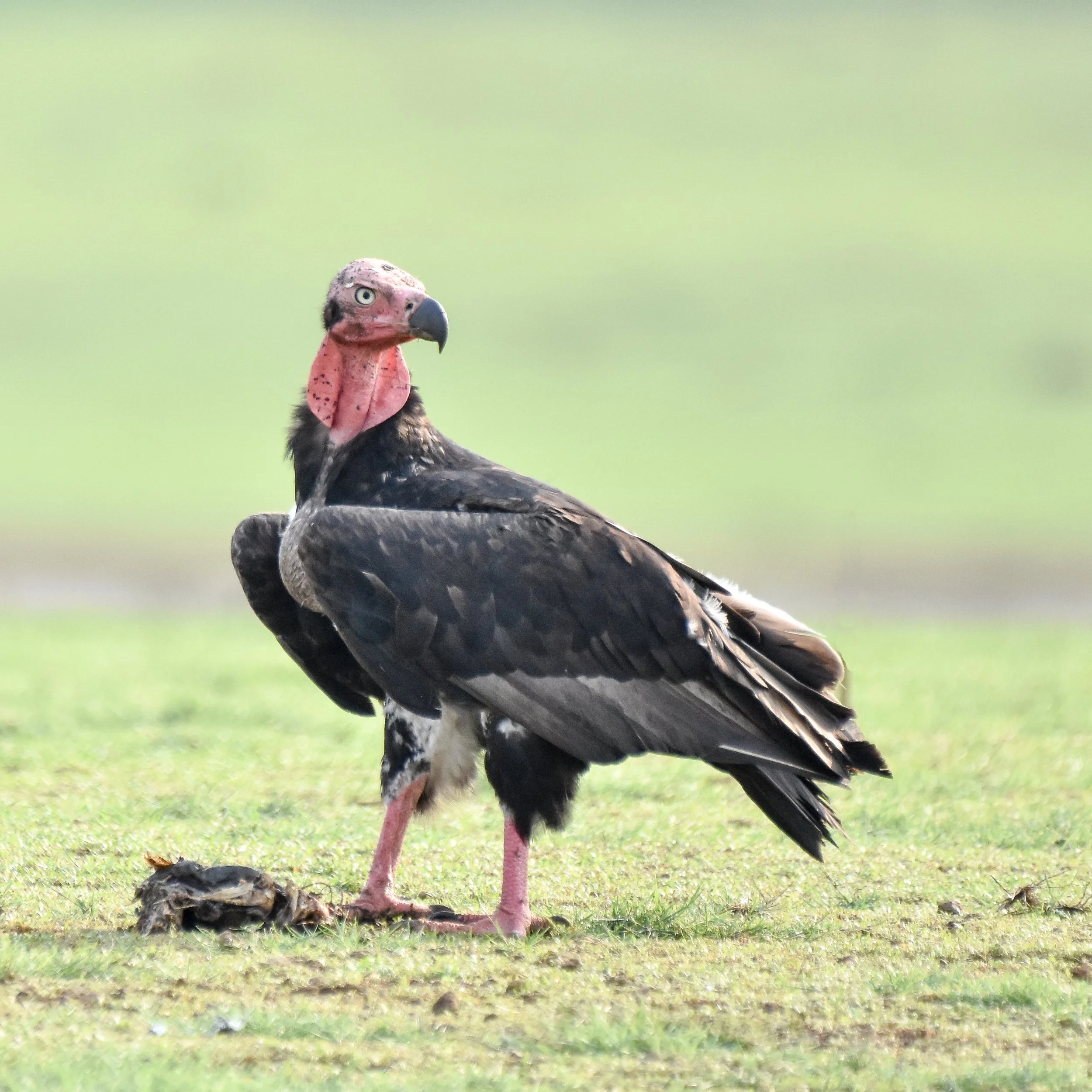
Sarcogyps calvus
Distribution: India and Southeast Asia
Physical Appearance: Head is covered in deep-red skin with black down and a heavy black beak. The plumage is black with a white breast.
Wingspan: 2 – 2.6 m
Mass: 3.5 – 6.3 kg
CS: Critically Endangered
Red-Headed Vulture
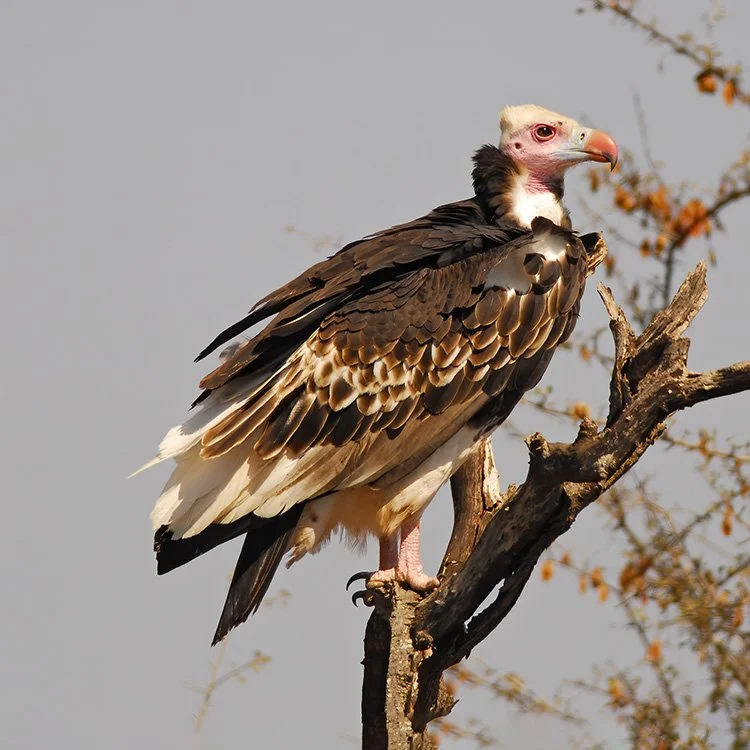
Trigonoceps occipitalis
Distribution: Sub-Saharan Africa
Physical Appearance: Head is covered in naked pink skin with a white crown and a white tuft of feathers atop it. The plumage is black, with grey feathers around the wing-tips, white feathers on the legs and a ruff of black feathers around the necks.
Wingspan: 2.1 – 2.3 m
Mass: 4.7 kg (Female) 4 kg (Male)
CS: Critically Endangered
White-Headed Vulture
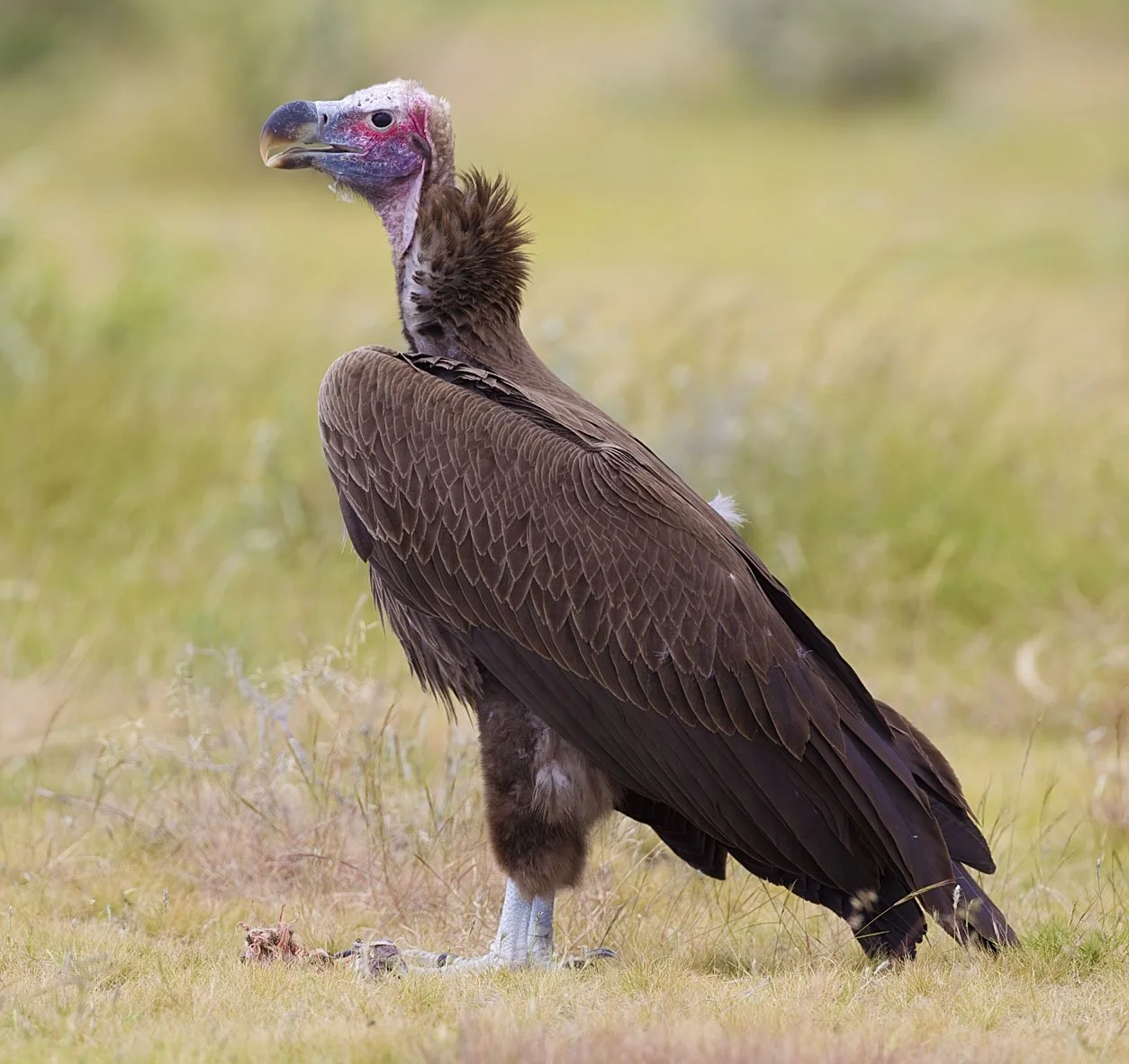
Torgos tracheliotos
Distribution: Sub-Saharan Africa and the Middle East
Physical Appearance: Head is covered in naked pink skin with a greyish base of the beak. Plumage ranges from brown to blank with a white break and ruffs on the legs. A ruff of feathers is also present on the back of the neck.
Wingspan: 2.5 – 2.9 m
Mass: 4.4 – 13.6 kg
CS: Endangered
Fun Fact: Considered to be the most powerful African vulture, it can eat up to 1.5 kg of food in a single meal.
Lappet-Faced Vulture
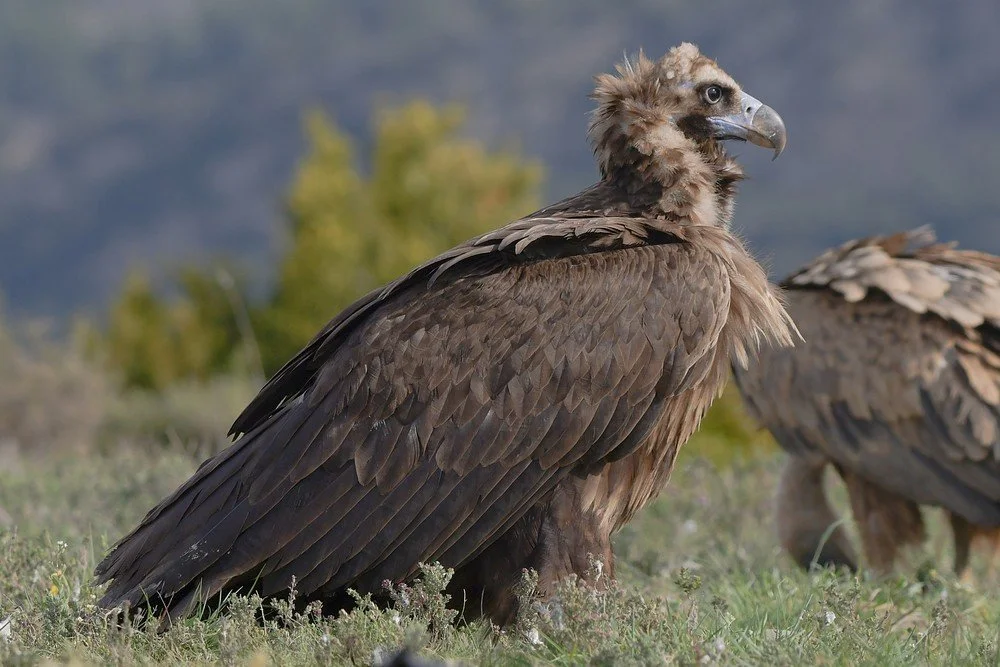
Aegypius monachus
Distribution: Southern Europe, Iran through to central China
Physical Appearance: Head covered in brown feathers with a cream band. Base of the beak is bluish-grey. Plumage is entirely dark brown.
Wingspan: 2.5 – 3.1 m
Mass: 7.5 – 14 kg (Female) 6.3 – 11.5 kg (Male)
CS: Near Threatened
Fun Fact: It is the largest species of Old World vulture.